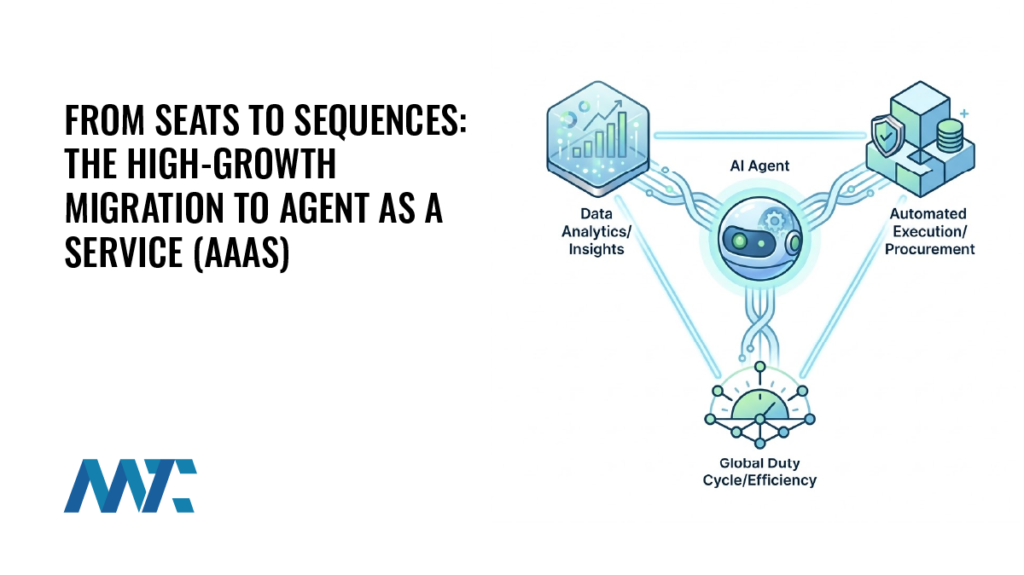
A paradigm shift in cloud computing, where autonomous artificial intelligence (AI) entities perform complex workflows rather than providing static software tools. While traditional Software as a Service (SaaS) models require human users to operate the interface to achieve an outcome, AaaS provides the outcome itself by deploying agents that can reason, plan, and execute tasks across multiple systems.
Core Characteristics of AaaS
This service model moves beyond simple automation by introducing a reasoning layer that allows software to act as a digital worker. The following attributes define the functional boundaries of modern agentic services.
- 1
- Contextual Awareness: Systems utilize memory and retrieval-augmented generation (RAG) to understand historical data and current environmental variables before making decisions.
- Tool Integration: Agents interact with external applications via APIs to read databases, update records, and communicate across different platforms.
- Goal Orientation: Workflows focus on achieving specific business results rather than merely performing repetitive programmed triggers.
The transition to AaaS allows organizations to scale their operational capacity without a linear increase in human headcount.
Business Benefits for Leadership
Implementing agentic services provides a competitive advantage by transforming how labor and technology intersect within an enterprise. Marketing and sales leaders often leverage these benefits to improve speed-to-lead and operational consistency.
- Increased Efficiency: Agents eliminate the manual data entry and routine coordination tasks that typically occupy significant portions of the workday.
- Continuous Operations: Digital workers provide 24/7 availability for critical functions like lead qualification, customer support, and system monitoring.
- 1
- Error Reduction: Autonomous systems maintain high precision in data processing and adhere strictly to compliance rules without the fatigue associated with human labor.
These advantages empower business leaders to redirect human capital toward strategic initiatives and creative problem-solving.
Primary Industry Use Cases
AaaS is applicable across diverse verticals where data-driven decision-making and multi-system workflows are prevalent. The following examples illustrate how different departments deploy autonomous agents to drive value.
- Marketing Automation: agents analyze campaign performance in real time and adjust bidding strategies or content distribution without manual intervention.
- Sales Operations: digital assistants research prospective leads, update CRM records, and draft personalized outreach based on recent buyer behavior.
- Finance Management: systems handle complex billing reconciliation, detect fraudulent patterns, and generate comprehensive financial reports by pulling data from disparate sources.
- Customer Experience: intelligent agents resolve multi-step support tickets by accessing shipping data, applying company policies, and issuing refunds.
Adopting an AaaS framework ensures that your technology stack contributes actively to organizational goals rather than serving as a passive repository for data.