Community as an Account-Based Marketing Tool: Building Trust with Key B2B Clients

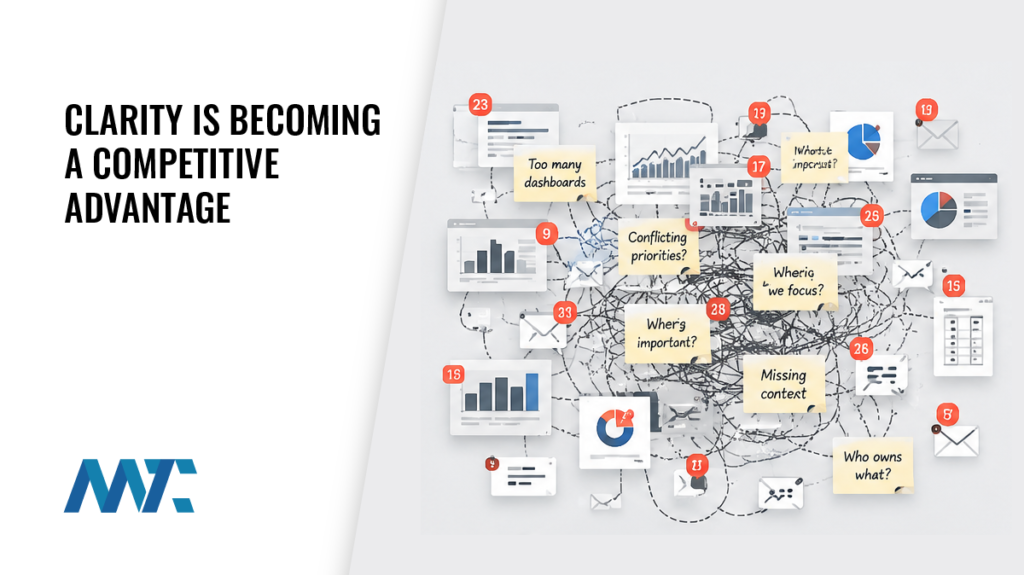
Over the past few years, B2B marketing has become faster, more scalable, and more tech-driven – but the quality of communication has suffered. Mass personalization, automation, and AI have created a paradox: the volume of communication has increased, but trust has decreased.
Today, companies can generate dozens of touchpoints with potential clients, yet still miss the real context of their challenges. As a result, B2B communication is often seen as a stream of generic outreach that overlooks business specifics, internal processes, and the logic behind decision-making.
Against this backdrop, companies are shifting toward more targeted strategies – especially account-based marketing (ABM), which focuses on engaging specific companies and their buying committees.
Also known as key account marketing, ABM is a strategic marketing approach that focuses on targeting and engaging specific high-value accounts, typically businesses or organizations, rather than casting a wide net to reach a broad audience.
Martech Zone
Within this approach, spaces for trusted interaction – such as industry conferences and professional communities – are becoming increasingly important.
Why Communities Are Becoming а Part of ABM Strategy
Professional environments and expert content build significantly more brand trust than direct marketing communications.
Edelman Trust Barometer
Unlike traditional channels such as email, paid acquisition, and branded content, a community creates a space where interaction isn’t perceived as a sales pitch. It’s an environment where members can regularly interact professionally, discuss real-world cases, and share experiences without brand pressure.
Within such communities, members:
- Exchange experiences and best practices
- Discuss real-world cases and current challenges
- Build professional relationships and collaborations
Through regular, natural interactions in this setting, trust builds over time – a key factor in B2B deals with long sales cycles and complex decision-making structures.
Types of B2B Communities
There are two main types of communities that address different business needs:
Product-Based
These bring together users of a specific product. Their main goals are to increase engagement, reduce churn, and deepen product knowledge through peer-to-peer exchange.
Professional
These are built around a specific industry, role, or area of specialization – for example, B2B marketing, cybersecurity, or product management.
Here, members come together not around a product, but around a shared professional identity and similar challenges. This type of community is especially effective as an ABM tool because it allows companies to engage target audiences earlier in the funnel.
How Successful Professional Communities Are Structured
Several international examples, based on the communities’ own websites:
- CMO Alliance: A global community for chief marketing officers (CMOs).
- Cybersecurity Marketing Society: A community for marketers in cybersecurity.
- Growth Marketing Pros: A community for growth marketers.
- B2B Marketing Leaders: A global community for B2B marketers.
All of these communities have clear positioning and bring members together based on a shared professional profile.
- CMO Alliance, launched in 2021, has over 10,000 members, including CMOs from large enterprises and startups across the US and Europe.
- Cybersecurity Marketing Society, launched in 2020, brings together hundreds of marketers from cybersecurity companies.
- Growth Marketing Pros, launched in 2018, brings together over 2,300 growth marketing professionals from SaaS companies across the US, Europe, and Israel.
- B2B Marketing Leaders, launched in 2024, brings together over 400 B2B marketers from 36 countries.
How to Build Your Community Within an Account-Based Marketing Approach
In complex B2B deals, trust and repeated brand touchpoints play a key role, which makes long-term engagement formats, including professional communities, more effective than one-off marketing interactions.
McKinsey
In B2B segments with long sales cycles, communities are increasingly used to build relationships and acquire clients. In this model:
- Joining is usually free
- Membership is restricted – only representatives of target companies can join, either by invitation or through a selective application process
- The key objective is to build trust, not drive direct monetization
This approach lowers the entry barrier for the target audience and maintains a sense of value and exclusivity through restricted access. According to Harvard Business Review, professional communities with a selective entry process increase engagement and perceived value by creating a sense of belonging and exclusivity (Source: HBR, “The Value of Building a Community”).
How to Attract Members to a Community
For a community to grow effectively, the communication platform must be convenient for its members. Global and US-based communities often use Slack for chats, as it is a familiar communication platform.

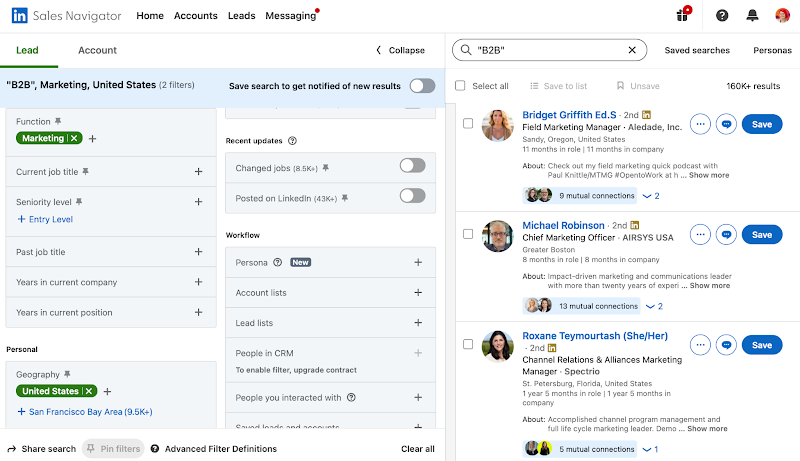
If the goal is to carefully select an audience based on specific criteria, targeted member-acquisition tools are essential. To find its target audience, the ModumUp team uses LinkedIn Sales Navigator – a LinkedIn tool that enables precise targeting through a wide range of filters.
The most useful filters include:
- Job titles or functions
- Industries
- Geography
- Company size (by number of employees or revenue)
For example, there are over 160,000 B2B marketing professionals from the US on LinkedIn, including more than 64,000 from mid-sized and large companies. They are active on the platform and responsive to messages.
Case Study: How a Closed B2B Community Can Build Trust and Attract Clients
One example is B2B Marketing Leaders, a closed global community for B2B marketers organized by the ModumUp agency.
The community follows a closed, curated format, with member selection and a focus on regular interaction and the exchange of practical experience. Platforms like LinkedIn, which allow filtering by professional interests, can be used to attract members.
The community implements:
- Regular member meetups
- Networking activities
- Discussions of case studies and professional challenges
The community brings together more than 400 B2B marketers from 36 countries.
According to the project team, this model makes it possible to:
- Build long-term relationships with the target audience
- Engage multiple representatives from the same company
- Shorten the sales cycle through established trust
Over a 1-1.5-year period, the ROI of such initiatives can reach 200-400%, based on profit generated from acquired clients.
This result is driven by consistent audience engagement: regular touchpoints, participation in discussions, and gradual trust-building without direct selling.
How a Community Drives Revenue
The monetization approach in this case differs from that of traditional marketing channels.
- Trust Replaces Cold Selling: Members become familiar with the company’s expertise through content, discussions, and activities, which lowers barriers to future engagement.
- Access to the Buying Committee: A community often includes several representatives from the same company, enabling engagement not just with one contact but with a broader group of decision-makers.
- Networking as the Starting Point: Formats such as Casual 1:1 Networking Chats or Random Coffee create a natural setting for discussing challenges without pressure or formal pitching.
- Trust-Based Demand Generation: When members face a relevant challenge, they turn to people they already trust instead of starting with a cold search. They may also share those challenges within the community, giving organizers an opportunity to respond to the need.
If a community is built from the beginning as a sales channel and a platform for active brand promotion, members quickly sense it, which undermines trust and engagement. In an account-based marketing model, value and trust come first – business results follow later.
What Happens Inside a B2B Community
A strong B2B community is not built around a single format. Its value comes from a mix of activities designed to meet different member needs – from networking and knowledge sharing to collaborative discussions of professional challenges.
As a proud member of the B2B Marketing Leaders community, I can confidently say that joining it was a turning point in my professional development. The community creates a unique environment where industry professionals share knowledge and grow their networks. The level of networking is exceptional, and the members are genuinely passionate about B2B marketing. The content we discuss – from articles and webinars to expert discussions – is 100% focused on the most pressing challenges in the field and offers practical solutions.
Ilya Nemchik, Senior Digital Marketing Specialist at Siemens, member of the B2B Marketing Leaders community
In the B2B Marketing Leaders community by ModumUp, all activities are free for members:
- Participation in monthly community meetups
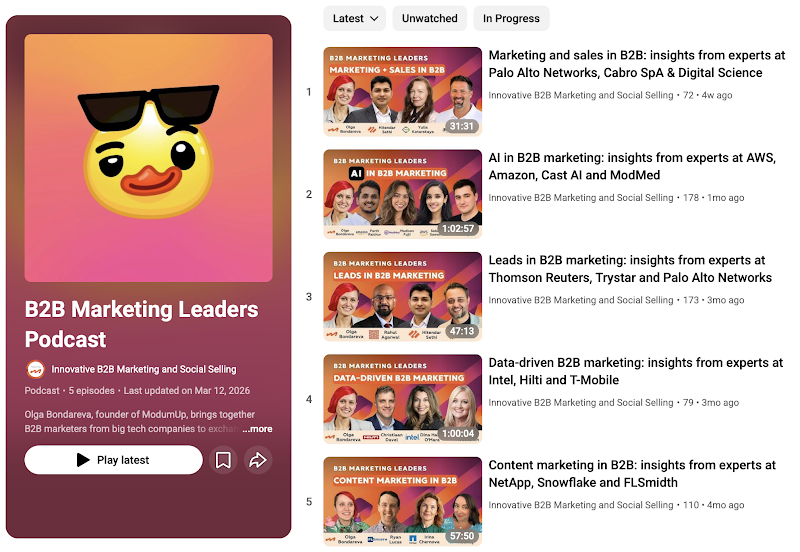
- Guest appearances on the community’s podcast
- Participation in 1:1 networking meetings with other members
- Interaction in the community chat for networking and experience sharing
Experts at ModumUp note that the community chat should remain a space for valuable content only. Moderation should help keep the chat active and encourage members to share practical experience.
What Members Get from the Community
A community only works if it creates value not just for the business but also for its members. Key value for members comes from several factors:
- Access to a relevant professional peer group
- Exchange of practical cases and experiences
- Quick access to expert knowledge
- Building new connections
B2B buyers trust expert content and recommendations from their professional networks more than direct brand messages.
Edelman Trust Barometer
As a result, a community becomes not just a communication platform, but also a space for faster professional growth and knowledge exchange.
How to Build an Effective B2B Community
In practice, several key principles stand out when building an effective B2B community:
- Clear positioning around a specific role or industry
- Focus on audience quality rather than scale
- Active moderation that ensures content remains valuable
- Mix of interaction formats, such as chats, meetups, discussions, and 1:1 networking
- Сommunity experience without direct selling
Strong communities are built not around content itself, but around regular interaction among members and the exchange of experience. In an environment where traditional communication channels are oversaturated, companies are finding it increasingly difficult to build trust through standard marketing tools.
Communities offer an alternative model – not based on direct selling, but on creating an environment where members can interact around shared professional interests.
That is exactly why communities are becoming an effective ABM tool – especially in segments where decisions take time, involve multiple stakeholders, and depend heavily on trust.
In a world where everyone knows how to reach everyone, the real value lies in creating a space where people can simply connect as people, without having to sell. Paradoxically, that is often where business relationships begin.