Julius: Use AI to Connect To Your Data, Ask Questions, and Get Insights
Modern teams are drowning in data but starving for insight. Spreadsheets live in silos, dashboards require constant maintenance, and even simple questions often demand technical resources that slow decision-making to a crawl. As organizations grow, the gap between data availability and data understanding widens, leaving marketers, operators, and executives frustrated by tools that feel powerful but inaccessible.
Julius
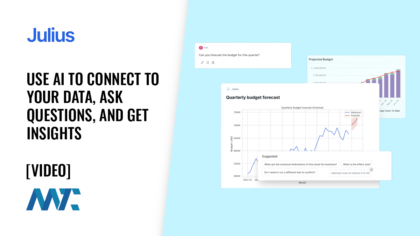
Julius is an AI-powered data analysis platform designed to let anyone explore, analyze, and visualize data using plain English. By connecting directly to your spreadsheets, databases, and cloud tools, Julius acts like an on-demand data analyst that delivers answers, charts, and reports in seconds.

What makes Julius compelling is not just that it can analyze data, but that it removes friction from the entire analytics workflow. Teams no longer need to wait on analysts, juggle multiple BI tools, or translate business questions into SQL. Julius enables faster experimentation, clearer storytelling, and more confident decisions by meeting users exactly where they work, including Slack and email. For growing organizations without large data teams, this can fundamentally change how insights are generated and shared.
Core Capabilities That Power Julius
The platform offers a broad set of capabilities, each designed to reduce complexity while increasing analytical depth. Below is an overview of the key features, organized alphabetically for clarity. Before diving in, it is worth noting that these features are designed to work together, allowing users to move seamlessly from raw data to automated insights without switching tools or contexts.
- AI-Driven Natural Language Analysis: Ask questions in plain English (NLP) and let Julius handle the underlying logic, calculations, and data transformations required to produce accurate answers.
- Automated Reporting: Schedule recurring reports that are automatically generated and delivered via Slack or email, ensuring stakeholders always have fresh insights without manual effort.
- Chart and Visualization Generation: Instantly transform datasets into clear charts and tables that help explain trends, comparisons, and anomalies.
- Code-Optional Workflows: Switch between conversational analysis and reproducible workflows using Python, R, or SQL when deeper customization or documentation is needed.
- Cross-Source Data Connections: Analyze data across spreadsheets, databases, and cloud storage to uncover insights that would otherwise remain fragmented.
- Slack Agent Integration: Tag
@Juliusin Slack to ask questions, generate reports, or share insights directly within team conversations. - Secure Data Handling: Keep proprietary data private, with strict controls that prevent customer data from being used to train AI models.
Taken together, these capabilities position Julius as more than a reporting tool. It functions as a shared analytical layer that adapts to how teams actually work.
I’m big on data analysis (spreadsheets DAU!), but often find myself frustrated by errors and slowness in trying to even analyze a basic spreadsheet in ChatGPT. Julius is good at this, and has only gotten better over time. It’s both very reliable, and can generate helpful ideas for extra analysis as well as visualizations.
Olivia Moore, AI Partner, Andreessen Horowitz
Julius is used by more than 2,000,000 users across startups and enterprises. According to the company, adoption has accelerated as teams look for faster, more flexible alternatives to traditional BI tools.
How Julius Works
Getting started with Julius is intentionally simple. Users connect their data sources, upload spreadsheets or link databases, and begin asking questions immediately.
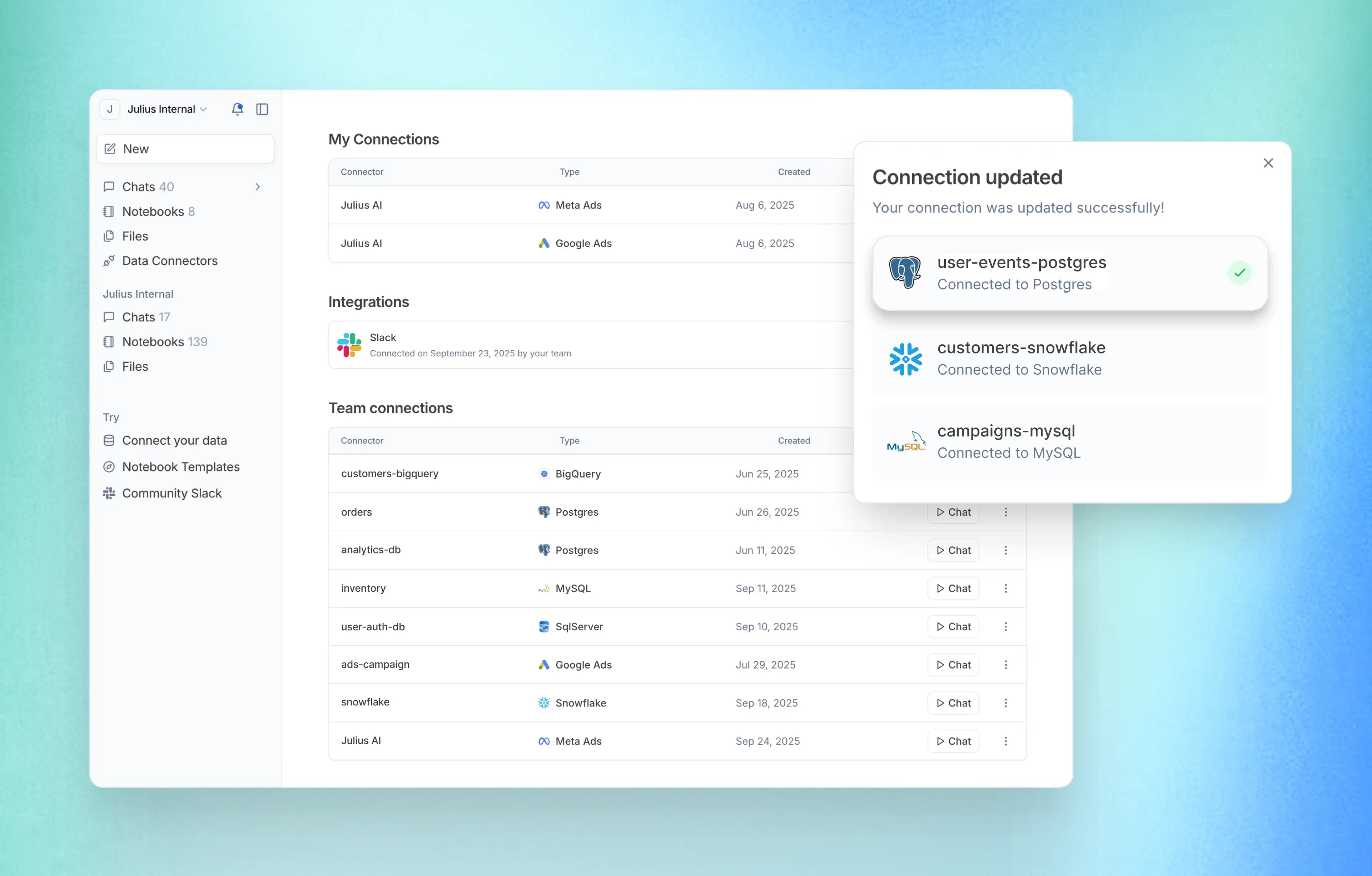
From there, Julius analyzes the data, suggests follow-up questions, and presents results as charts, tables, or full reports. Over time, it learns the structure and logic of your datasets, allowing future analyses to become faster and more context-aware.
Julius.ai completely changed how I approach growth. I can analyze multiple datasets at once and turn them into insights for customer acquisition, retention, and marketing campaigns, all without waiting on engineering or hiring data analysts.
Ami Gosalia, Head of Growth, Home From College
Data security is a core requirement for analytics platforms, and Julius addresses this head-on. The platform is compliant with SOC 2 Type II, TX-RAMP, and GDPR standards, and customer data is never used to train AI models. This makes Julius suitable for teams operating in regulated industries or handling sensitive business information.
Julius is used across finance, marketing, operations, data science, research, and executive teams. Common use cases range from cash flow forecasting and churn prediction to acquisition analysis and scientific correlation studies. By abstracting away technical complexity, Julius allows each role to focus on decisions rather than data preparation.
If your team is spending more time wrangling data than acting on it, Julius offers a faster path from questions to answers. Connect your data, ask what you need to know, and let AI handle the analysis so your team can focus on impact.