Top 5 Virtual Data Rooms with AI Assistant Integrations

M&A due diligence has always been a document-heavy grind: thousands of contracts, financials, and disclosures to review, cross-reference, and question before anyone signs anything. For years, virtual data rooms (VDRs) solved half of that problem – secure storage, permissions, and audit trails – while the actual analysis still happened manually, one document at a time.
That’s changing fast. A new generation of VDRs now embeds AI directly into the data room, and a growing number go a step further by connecting to the AI assistants deal teams already use – ChatGPT, Claude, Microsoft Copilot – through structured integrations rather than risky copy-paste workflows. For marketing and business teams evaluating martech-adjacent infrastructure, this shift matters: it’s a clear case study in how AI assistants are moving from another app on the side to embedded, permission-aware layers inside core business tools.
Below is a look at how AI-VDR integrations actually work, followed by the five providers currently leading on this front.
How AI Assistants Work Inside a Virtual Data Room
Connecting an AI assistant to a data room isn’t the same as uploading a PDF into ChatGPT. Deal documents are confidential, access is tightly scoped by role, and every action has to be auditable. That constraint shapes how these integrations are built, and it’s worth understanding the mechanics before comparing providers.
Permission-aware access, not blanket access. A properly built integration doesn’t give the AI assistant a copy of the entire data room. It operates within the same access rights as the human user who invoked it – if you’re only permissioned to see the finance folder, the AI can only search and summarize what’s in the finance folder. This is typically enforced through an underlying protocol layer (more on that below) that mediates every request between the assistant and the data room’s permission engine.
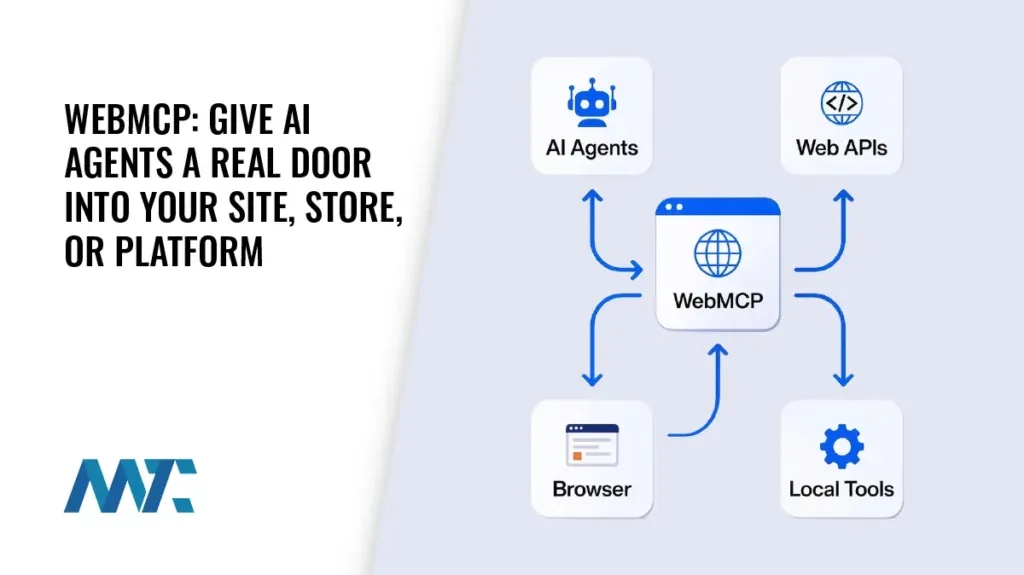
The Model Context Protocol (MCP) is the emerging standard. Several VDR providers have adopted MCP, an open protocol that lets AI applications like Claude or ChatGPT connect to external tools and data sources through a standardized interface rather than a custom-built integration for each pairing. In a VDR context, an MCP server acts as a secure bridge: the assistant sends a natural-language request (e.g., summarize the change-of-control clauses across all supply agreements), the MCP server translates that into scoped actions against the data room, and only the documents the user is authorized to see are returned. No files leave the platform, and none of that content is used to train the underlying AI model.
Common tasks these integrations handle. Across providers, the recurring use cases look similar: setting up folder structures and auto-indexing incoming documents, semantic search across thousands of files (finding concepts, not just keywords), summarizing long contracts or financial statements, flagging anomalies like unusual indemnity clauses or missing signatures, drafting responses to routine Q&A requests, and redacting personally identifiable information before documents go out to a wider bidder group.
What to check before trusting a has AI claim. Not all AI-powered VDR marketing means the same thing. Some platforms bolt on AI features like OCR and keyword-based redaction, which are useful but don’t require any external AI assistant. Others build a genuine two-way bridge to tools like Claude or Copilot, letting deal teams work in the interface they already know rather than learning a new one. When evaluating a provider, it’s worth asking specifically whether the AI lives entirely inside their proprietary interface, or whether it can be accessed through the AI assistant your team already uses daily.
With that groundwork in place, here’s how five leading providers currently stack up.
1. Ideals VDR
Ideals VDR is the clearest example of the MCP approach done well. Its Model Context Protocol server creates a direct, secure bridge to Claude, ChatGPT, and Microsoft Copilot, letting deal teams structure data rooms, search and summarize documents, manage Q&A, and run diligence workflows entirely through natural-language prompts – inside whichever assistant they already have open. Permissions carry over automatically: the AI can only see and act on what the user is already authorized to access, and none of the deal data is used to train Ideals’ or any third party’s models.
Beyond the AI layer, Ideals remains a strong fit for teams that want enterprise-grade security (ISO 27001, SOC 2, GDPR compliance) without enterprise complexity. Setup is fast, the interface is genuinely easy for non-technical users, and – unlike several competitors that quote custom pricing per project – Ideals publishes transparent, flat-rate plans with no hidden fees or per-page charges. For teams that want AI-assistant integration and predictable costs in the same package, it’s currently the most complete option on the market.
2. Datasite
Datasite is the institutional standard for large-cap M&A, and its AI investment reflects that scale. Its most mature AI feature is automated redaction – scanning documents to detect and mask personally identifiable information across thousands of pages, a task that previously consumed days of associate time. Datasite also runs OCR across 16 languages, so search results stay accurate even in non-English document sets.
More recently, Datasite partnered with Legora, an AI platform built for legal professionals, allowing deal teams to query and analyze Datasite documents directly inside Legora’s environment, with Datasite’s permissions carrying over automatically. It’s a narrower integration than a general-purpose assistant bridge – built specifically for legal analysis workflows – but it points in the same direction: keeping AI-assisted work inside the data room’s permission boundary rather than exporting files elsewhere.
3. Ansarada
Ansarada has arguably built the deepest bench of proprietary AI tools of any VDR provider, centered on its in-room AI assistant, AiDA. Its AI-Sort feature automatically indexes and categorizes uploaded documents into a due diligence structure, AI-Redact handles bulk redaction across the room, and AI-Smart Q&A routes and drafts responses to buyer questions. Its predictive analytics engine tracks bidder engagement signals – documents viewed, login frequency, questions asked – and benchmarks them against a large base of historical deals to flag risk and forecast outcomes.
Ansarada’s AI is largely built as an in-platform experience rather than a bridge to external assistants like Claude or ChatGPT, which makes it a strong choice for teams who want a single AI-native interface but a less natural fit for teams standardized on a specific external AI assistant across their broader workflow.
4. Intralinks
Intralinks (now part of SS&C) built its AI capabilities, marketed under DealCentre, around the core due diligence workflow: document scanning, AI-assisted redaction, and bidder engagement tracking layered onto its long-standing enterprise VDR. It remains a common choice for large, multi-party transactions where institutional pedigree and rigorous permissioning matter as much as the AI layer itself.
Its AI tooling is comparable in scope to Datasite’s – practical, redaction- and workflow-focused – rather than built around a direct connection to third-party AI assistants. Teams evaluating Intralinks primarily for AI-assistant integration, rather than institutional due diligence infrastructure, may find the fit narrower than with Ideals or Ansarada.
5. DealRoom
DealRoom differentiates itself by layering project-management functionality – task boards, timelines, pipeline tracking – on top of standard data room features, and its AI tools lean into that hybrid identity. Rather than a stand-alone chat assistant, DealRoom’s AI capabilities focus on speeding up document review and organizing diligence workflows within its broader project-tracking interface.
This makes it a reasonable option for mid-market teams who want deal management and document storage combined in one place, though teams specifically prioritizing a mature bridge to external AI assistants will find the other providers on this list further along.
Choosing a Provider for AI-Assisted Due Diligence
If your priority is connecting the AI assistant your team already relies on – Claude, ChatGPT, or Copilot – directly and securely to a data room, the field narrows quickly. Ideals currently offers the most complete version of that experience, combining a genuine MCP integration with transparent pricing and a low setup barrier. Datasite and Ansarada offer strong AI capabilities of their own, though built more as in-platform tools than as a bridge to outside assistants. Intralinks and DealRoom round out the list for teams whose priorities lean toward institutional scale or project-management overlap, respectively.
As MCP and similar protocols mature, expect more VDR providers to follow this pattern – treating the data room not as a silo, but as a permissioned data source that AI assistants can work within safely. For now, the providers above represent the clearest signal of where that trend is headed.