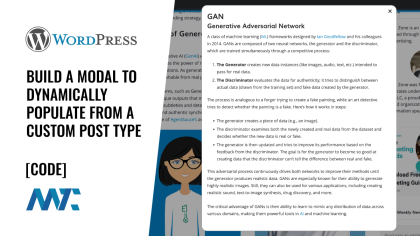
A set of web development techniques that uses client-side technologies to create dynamic web applications. AJAX allows web applications to send and retrieve data from a server asynchronously, without interfering with the display and behavior of the existing page. This decouples the data interchange layer from the presentation layer, enabling web pages to change content dynamically without reloading the entire page.
Core Technologies
AJAX relies on several key technologies:
- JavaScript: The primary programming language used to send asynchronous requests and manipulate the DOM.
- XMLHttpRequest (XHR): An API that allows JavaScript to make HTTP requests to a server.
- JSON or XML: Data formats used to structure the information exchanged between the client and the server.
How AJAX Works
AJAX enables web applications to update parts of a page without requiring a full page reload. Here’s a simplified overview of the process:
- User Interaction: A user interacts with a web application, triggering an event (e.g., clicking a button).
- Asynchronous Request: JavaScript sends an asynchronous request to the server using the XMLHttpRequest object.
- Server Response: The server processes the request and sends back data in a structured format, such as JSON or XML.
- DOM Update: JavaScript receives the data and updates the Document Object Model (DOM) dynamically, reflecting the changes on the page.
Advantages of AJAX
AJAX offers several benefits for web development:
- Improved User Experience: Pages load faster and feel more responsive because only the necessary data is updated.
- Efficient Data Exchange: Reduces the amount of data transferred between the client and the server.
- Dynamic Content: Allows for the creation of highly interactive and dynamic web applications.
Common Use Cases
AJAX is widely used in various scenarios:
- Form Submissions: Submitting forms without reloading the page.
- Auto-Complete: Providing real-time suggestions as a user types.
- Data Visualization: Updating charts and graphs dynamically based on user interactions.
- Real-Time Updates: Displaying live data feeds, such as stock prices or social media updates.
Modern Implementations
While XML was originally used for data exchange, modern implementations often use JSON due to its simplicity and ease of use with JavaScript. Additionally, newer technologies like the Fetch API have emerged as alternatives to XMLHttpRequest, offering more powerful and flexible features for making HTTP requests.