Mobile Rich Media Advertising: How Interactive Ads Drive Attention, Intent, and Performance

Mobile rich media ads are interactive advertising units designed for smartphones and tablets that go beyond static images or text. Unlike standard mobile display ads, which present a single visual and a single click action, rich media ads allow users to interact directly with the creative. That interaction can include tapping to expand, swiping through content, playing video, configuring products, answering questions, or shopping without leaving the ad experience.
The defining characteristic is user agency. If a mobile ad allows users to actively engage with the unit rather than passively view it, it qualifies as rich media. This distinction matters because mobile behavior is fast, touch-driven, and exploration-oriented, which often limits the effectiveness of static banners.
How Mobile Rich Media Ads Differ From Other Mobile Ad Types
Traditional mobile ads are optimized for reach and simplicity. They load quickly, are inexpensive to produce, and scale easily, but they provide limited insight beyond impressions and clicks. Rich media ads expand the role of mobile advertising by adding depth and measurable engagement.
Recent benchmarks consistently show that static mobile banners capture minimal attention, while interactive formats extend time spent and engagement.
Animated and interactive HTML5 banners deliver roughly 2× the engagement and click-through rate of static banners, with significantly higher dwell time on mobile devices.
MarketingLTB
Rather than replacing standard display, rich media complements it. Static ads provide efficient reach; rich media provides interaction, insight, and intent signals that are otherwise difficult to capture.
How Mobile Rich Media Ads Work
From a delivery perspective, mobile rich media ads use the same buying and serving infrastructure as other mobile ads. They run through mobile DSPs, ad servers, social platforms, and in-app SDKs using HTML5, interactive video wrappers, or native mobile components. This allows them to be bought programmatically and scaled across publishers and apps.
The difference lies in what happens after the impression. Rich media ads generate multiple engagement signals, including expansions, swipes, video starts and completions, time spent, and in-ad selections. These signals flow into analytics and optimization systems, giving marketers a more detailed picture of interest and intent than clicks alone.
This interaction data is increasingly valuable as privacy changes reduce the availability of third-party identifiers, making first-party engagement signals more strategically important.
How Mobile Rich Media Ads Are Created
Creating mobile rich media ads begins with defining the objective. Awareness-driven executions emphasize storytelling and attention. Mid-funnel executions focus on exploration and education. Conversion-oriented rich media prioritizes reducing friction between interest and action.
Creative teams design the interaction model first, deciding what the user sees initially and how the experience unfolds through taps or swipes. Development typically uses HTML5 frameworks, interactive video tooling, or native platform components such as social carousels or shoppable tags.
Performance depends heavily on engineering discipline. Rich media ads are built to load progressively, keeping the initial state lightweight and deferring heavier assets until user interaction occurs. This approach protects mobile speed while still allowing depth once interest is demonstrated.
Core Mobile Rich Media Ad Formats
Mobile rich media advertising encompasses a range of interactive formats designed to align with how people actually use their phones. Rather than relying on a single static image and a single click, these formats invite users to explore, interact, and engage on their own terms. Each format serves a slightly different purpose, from early-stage discovery to mid-funnel evaluation and even direct conversion, making rich media a flexible toolset rather than a single ad type.
- Carousel and swipeable ads: Carousel and swipeable ads allow users to move horizontally through multiple panels within a single placement, each featuring its own image, message, or product. Commonly used in ecommerce and retail, this format functions like a mini catalog, enabling product discovery and comparison without requiring a page load. The ability to swipe at one’s own pace makes these ads feel natural in mobile feeds.
- Expandable banners: These ads begin as standard mobile banner placements and expand into a larger canvas when tapped. This approach allows advertisers to introduce more detailed messaging, visuals, or interactive elements without immediately disrupting the user’s browsing experience. Expandable banners are particularly effective for products or offers that require additional explanation, as they reward curiosity while keeping the initial ad footprint lightweight.
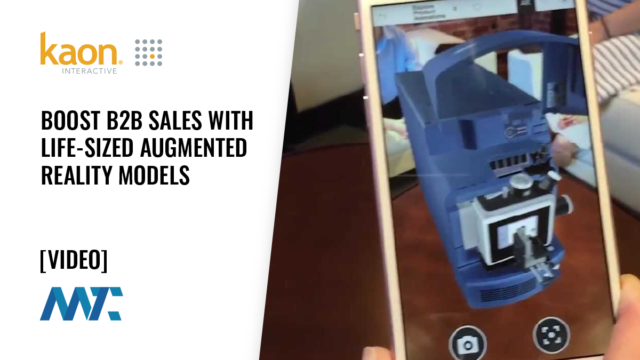
- Immersive and shoppable formats: Immersive formats, including 360-degree views and augmented reality (AR), place products into real-world or simulated environments so users can see how they look, fit, or function in context. Shoppable ads take this a step further by integrating product feeds, pricing, and checkout paths directly into the ad unit. Together, these formats reduce friction between discovery and purchase by allowing users to move seamlessly from exploration to action.
- Interactive video ads: Interactive video ads layer clickable elements, product cards, or branching choices directly onto mobile video inventory. Instead of passively watching a pre-roll or in-feed video, users can explore features, learn more about specific products, or choose how the story unfolds. This format turns video from a view-based metric into an engagement-driven experience that captures intent as well as attention.
- Playable and gamified ads: Playable and gamified ads give users a short, interactive experience such as a demo, quiz, or challenge directly within the ad. By letting people participate before clicking through, these formats often pre-qualify interest and lead to higher-quality engagement. They are especially effective for apps, education, financial tools, and products that benefit from hands-on exploration.
Taken together, these formats illustrate why mobile rich media advertising is more than a visual upgrade to traditional display. Each format is designed to match a specific user behavior and marketing objective, whether that’s sparking curiosity, encouraging deeper evaluation, or driving conversion. When chosen intentionally and measured against the right engagement signals, mobile rich media formats turn ads into experiences that users opt into rather than scroll past.
When Mobile Rich Media Ads Perform Best
Mobile rich media ads perform best when interaction adds genuine value. Products that benefit from demonstration, comparison, or visualization, such as retail, automotive, travel, entertainment, apps, and financial services, tend to see the strongest results.
They are particularly effective in retargeting scenarios, where relevance amplifies engagement.
Display retargeting campaigns using dynamic and interactive creative formats consistently outperform standard prospecting display, with materially higher click-through and conversion rates.
MarketingLTB
Rich media is less effective when used solely for low-cost reach or when interactivity is added without purpose. If interaction does not help users understand, evaluate, or act, it becomes noise rather than value.
Why Mobile Rich Media Ads Drive Better Engagement
The performance advantage of rich media stems from attention. Static mobile ads are often visible for a fraction of a second before being scrolled past. Rich media earns time by inviting participation.
Immersive formats extend this advantage further.
Augmented-reality mobile ads generate an average of 12.6 seconds of active attention, compared to 2.3 seconds for standard mobile in-feed ads, resulting in significantly higher brand impact.
Snapchat
That additional attention correlates strongly with improved recall, consideration, and downstream conversion performance, particularly when paired with relevant targeting.
KPIs for Measuring Mobile Rich Media Performance
Measuring the performance of mobile rich media advertising requires a broader lens than traditional display metrics. Because these formats are designed to encourage interaction, exploration, and time spent, the most meaningful KPIs focus on how users engage and what happens after that engagement. The following performance indicators are listed in alphabetical order and together provide a more complete view of rich media effectiveness across the funnel.
- Click-through rate (CTR): The percentage of impressions that result in a click. In rich media campaigns, CTR should be interpreted alongside interaction metrics, as many users may engage deeply within the ad without immediately clicking through.
- Cost per engaged user: Total campaign spend divided by the number of users who meaningfully interacted with the ad. This KPI reframes efficiency around quality engagement rather than raw impressions or clicks.
- Engagement time (dwell time): The average amount of time users spend actively interacting with the ad unit. Longer engagement times typically indicate stronger attention, message absorption, and intent.
- Incremental lift metrics: Measures such as brand lift, consideration lift, or conversion lift versus a control group where available. These metrics help quantify the true incremental impact of rich media beyond last-click attribution.
- Interaction rate: The percentage of impressions that result in any in-ad action, such as a tap, expand, swipe, or interaction. This KPI reflects how effectively the creative motivates users to engage rather than scroll past.
- Post-engagement conversion rate: The rate at which users who interacted with the ad go on to convert, compared to users who did not interact. This metric connects engagement quality to downstream business outcomes.
- Secondary actions: Actions taken within the ad beyond the initial interaction, such as product views, carousel swipes, configuration changes, or feature explorations. These signals reveal user interests and evaluation behavior before a click or conversion occurs.
- Video starts and completion rate: For interactive video units, these metrics track how many users initiate playback and how many watch through to completion. High completion rates suggest strong relevance and sustained attention on mobile.
Taken together, these KPIs shift performance evaluation from simple exposure to meaningful engagement and impact. When marketers track and optimize against this full set of metrics, mobile rich media advertising becomes easier to justify, refine, and scale as a performance-driven channel rather than a purely creative one.
Strategic Role of Mobile Rich Media Advertising
Mobile rich media advertising is not about replacing standard mobile ads. It adds a layer of engagement, insight, and performance where those outcomes matter most. When used intentionally, rich media transforms mobile advertising from a fleeting impression into a measurable experience that informs both creative and media strategy.
Takeaways
- Interaction drives value: Rich media performs best when interaction helps users explore, understand, or act, rather than simply adding visual complexity.
- Clicks are not enough: Interaction rate, dwell time, and post-engagement conversions provide a more accurate picture of performance than CTR alone.
- Format should match funnel stage: Immersive and interactive formats excel at awareness and consideration, while shoppable and dynamic formats perform best closer to conversion.
- Mobile-first execution is mandatory: Progressive loading, touch-friendly interactions, and fast initial render times are essential for strong mobile performance.
- Engagement data fuels strategy: The true advantage of rich media lies in the behavioral signals it generates, which can guide optimization, targeting, and future creative decisions.
As mobile continues to dominate digital consumption and privacy constraints reshape targeting, ad formats that generate first-party interaction signals will play an increasingly central role in performance marketing.