WordPress
WordPress is a popular content management system (CMS) that enables users to create, manage, and publish digital content without needing to code. Initially launched in 2003 as a blogging platform, WordPress has evolved into a versatile CMS that powers many websites, from small personal blogs to large corporate sites. Its core features include:
- User-friendly Interface: WordPress is designed with a focus on usability, making it accessible for users with any level of technical skill. The dashboard allows for easy navigation, content creation, and site management.
- Themes and Customization: Users can change the look and feel of their website using themes. Thousands of free and premium themes are available, many of which are customizable to meet specific design requirements.
- Plugins: WordPress extends its functionality with plugins, allowing users to add features such as contact forms, SEO tools, social media integration, etc. The plugin repository offers over 58,000 free plugins, with thousands more premium options.
- Responsive Themes: WordPress themes are generally responsive, meaning they automatically adjust to look good on any device, from desktops to smartphones.
- Multilingual Support: WordPress supports multilingual sites either natively or through plugins, enabling the creation of websites in multiple languages.
- Media Management: Users can easily upload and manage media files (images, videos, etc.) using the drag-and-drop media uploader. WordPress also offers basic image editing features.
- Content Management: It provides tools for creating and managing content, including posts, pages, and custom post types, along with categories and tags for organizing content.
- User and Role Management: WordPress includes a built-in system for managing users, allowing site owners to assign roles and permissions to control access to different parts of the site.
- Security and Updates: Regular updates are released to enhance security and introduce new features. WordPress also supports SSL certificates for encrypted connections and various security plugins to protect against common threats.
WordPress’s flexibility, scalability, and extensive community support have made it a go-to choice for creating and managing websites. WordPress offers comprehensive tools to build and maintain a professional online presence, whether for a small personal project or a large enterprise solution.
Articles Tagged WordPress:
-

7 SEO Workflow Tools That Help Content Teams Move From Research to Results
Content teams rarely struggle because they have no SEO data. The greater challenge is turning research, audits, and recommendations into work that can be assigned, completed, and measured. One platform identifies keywords. Another finds technical issues. A third scores content,…
-

The Prompt Loop: Perfect PageSpeed Scores on WordPress Without Moving a Pixel Using AI
There is a special kind of pressure that comes from publishing research about page speed. Put a number on how slow everyone else is, and you have volunteered your own site as the first thing every skeptic tests. Earlier this…
-
Distribb: Rank in Google and AI Search Without a Content Team
Organic growth has quietly become a treadmill. Ranking today means publishing long-form content on a relentless schedule, earning backlinks month after month, and now showing up in a second arena entirely: the answers that ChatGPT, Gemini, and Perplexity give when…
-
Best GDPR-Friendly Google Analytics Alternatives
Privacy rules keep tightening across Europe and beyond, and web analytics tools that once felt like the default now raise real legal questions. Relying on a platform that ships visitor data overseas, or drops tracking cookies without clear consent, creates…
-
The Cruelest Form Error: “Too Many Characters” … and the Two-Minute JavaScript Fix
You've been at it for two minutes. You've weighed every word. The bio, the product description, the support ticket — whatever it is, you've trimmed the fat, sharpened the phrasing, and made it good. You hit Submit. Error: This field…
-
Taming WordPress: How I Cut Stack Costs With $1,632 Net Annual Savings While Achieving a 99 PageSpeed Score using Claude Code
For nearly twenty years, maintaining a high-traffic web presence has meant constantly outrunning the slow accumulation of digital debris. What starts as a series of quick feature trials and minor design tweaks inevitably hardens into systemic technical debt, burying application…
-
What’s My IP Address
If you ever need to know your IP address as viewed from an online source, here you go! I've updated the app's logic to attempt to find the user's true IPv4 and IPv6 addresses (if enabled). The challenges are found…
-
ShopWP: Transform Your WordPress Site into a Shopify Powerhouse Shop
You picked WordPress for a reason. Maybe it was the content flexibility, the plugin ecosystem, or a theme that matches your brand exactly. But Shopify handles your products, inventory, and payments—and you don't want to rebuild that operation just to…
-
Surfer: One Workflow for Google and AI Search Visibility
The way people search for answers has fragmented. A potential customer might still type a query into Google, but they're just as likely to ask ChatGPT, Gemini, or Perplexity for a recommendation and skip the results page entirely. For content…
-
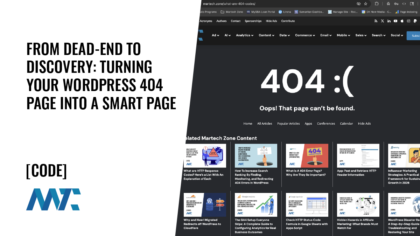
From Dead-End to Discovery: Turning Your WordPress 404 Page into a Smart Page
As I reviewed my site's analytics, I noticed that I was getting a lot of visitors landing on my 404 page. My first step is to ensure that I didn't remove a page without redirecting it. More often it's another…
-
MailerSend: Deliver Your Essential Email and SMS Without the Technical Headaches
Reliability is the silent engine of a successful digital product. When a subscriber signs up for your newsletter or a customer requests a password reset, every second of delay erodes trust. Managing high-volume messaging in-house or through rigid providers often…