10 Key Marketing Statistics That Will Drive Successful Marketing Returns in 2026
Marketing rarely changes all at once. It shifts quietly, then suddenly the old playbook stops working. Heading into 2026, a handful of data points make it clear that the ground has already moved. These statistics are not predictions or trend pieces. They are signals that budgets, workflows, creative, measurement, and even team structure need to evolve. What matters most is not memorizing the numbers, but understanding how they change what good marketing looks like going forward.
Table of Contents
AI Is Moving From Tools to Teammates
62% of organizations are at least experimenting with AI agents.
McKinsey
This is the moment when AI stops being something marketers use and becomes something they work with. The practical shift is toward agent-assisted workflows that handle research, drafts, variations, QA, and reporting before a human ever steps in. Marketers should be focused on designing processes, guardrails, and approval layers rather than debating whether AI belongs in marketing at all. The teams that win will be the ones that decide where human judgment creates the most value and let machines handle the rest.
Retail Media Has Become a Core Growth Channel
U.S. retail media ad spending is projected to reach $69.33 billion in 2026.
eMarketer
Retail media is no longer an experimental line item or something owned only by ecommerce teams. It is becoming one of the most measurable and controllable performance environments available to marketers. The response should call for tighter coordination among product content, pricing strategy, promotions, and media execution. This also means treating retailer platforms as insight engines. What converts there should shape creative, messaging, and even product positioning everywhere else.
Social Platforms Are Now End-to-End Commerce Channels
U.S. social commerce sales are projected to surpass $100 billion in 2026.
eMarketer
Social marketing is no longer just about awareness or engagement metrics. It is increasingly about shortening the distance between inspiration and purchase. Marketers should be building creatives that answer buying questions immediately, reduce friction, and feel native to how people already use these platforms. That also means rethinking measurement expectations. The goal is not perfect attribution, but consistent performance signals that tie creative, audience, and offer decisions to real outcomes.
Search Visibility Matters More Than Clicks
Only 360 out of every 1,000 U.S. Google searches result in a click to the open web.
Sparktoro
This is a wake-up call for how marketers define success in search. Visibility, credibility, and memorability increasingly happen without a website visit. The proper response is to expand SEO goals beyond traffic alone and to optimize for presence in rich results, summaries, and brand mentions that shape decisions upstream. At the same time, this reinforces the need to invest in channels you control, such as email, community, and direct relationships, so discovery does not depend on any single platform.
Email Remains the Most Reliable Revenue Engine
For every $1 spent on email marketing, many marketers report returns between $10 and $36.
Litmus
Email’s value is not just financial. It is structural. It gives marketers identity, consent, and continuity in a fragmented digital environment. The opportunity heading into 2026 is not to send more messages, but to send better ones. That means designing lifecycle programs that reflect real behavior, maintaining deliverability discipline, and continuously refining messaging through testing. Email is where trust compounds when everything else becomes noisier.
SMS Is a High-Intent Channel, Not a Broadcast Tool
Average SMS marketing conversion rates range from 21% to 40%.
Infobip
SMS works because it is personal, immediate, and expectation-driven. That is also why it is easy to misuse. Marketers should treat SMS as an extension of service and urgency rather than another promotional megaphone. The most innovative programs focus on moments that matter, keep frequency low, and make opting in and out effortless. Used well, SMS strengthens relationships. Used poorly, it erodes trust faster than almost any other channel.
Connected TV Is Redefining Video Strategy
CTV ad spending is projected to reach $46.89 billion by 2028, surpassing traditional TV.
eMarketer
Even before it overtakes linear TV, connected TV is changing how video works. Marketers should stop thinking of CTV as repackaged television and start treating it as a performance-aware, testable channel. Creative needs to earn attention quickly, frequency needs active management, and success needs to be defined beyond impressions. The marketers who adapt now will be better positioned as buying models and measurement standards continue to mature.
Customers Are More Protective of Their Data Than Ever
71% of customers feel increasingly protective of their personal information.
Salesforce
Privacy is no longer a compliance topic tucked away in legal reviews. It is part of the customer experience. Marketers should simplify consent flows, explain why data is collected, and clearly demonstrate value in return. Trust is becoming a performance variable. When customers feel respected, they share more accurate information and stay engaged longer. When they do not, even the best targeting fails.
Personalization Is Expected, Not Impressive
73% of customers say companies treat them like an individual rather than a number.
Salesforce
This signals a rising baseline, not a competitive advantage. Personalization is becoming table stakes, which means shallow tactics no longer stand out. The opportunity in 2026 is context-driven relevance that reflects where someone is in their journey and what they actually need next. That requires better data hygiene, tighter lifecycle thinking, and alignment across channels so experiences feel coherent rather than stitched together.
Digital Advertising Now Dominates Global Spend
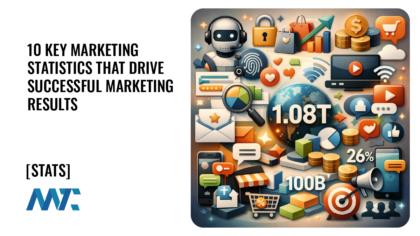
Global ad revenue is expected to reach $1.08 trillion, with digital accounting for over 73%.
Reuters
This level of concentration means competition is intensifying everywhere at once. The response cannot be channel hopping or constant reinvention. Marketers need specialization inside channels paired with integration across them. Creative, landing experiences, data, and measurement must work together as a system. When they do not, costs rise, and returns flatten. In 2026, efficiency comes from coherence.
Closing Thoughts
Taken together, these statistics point to a single truth: marketing is becoming more operational, more trust-dependent, and more interconnected. Success in 2026 will not come from chasing trends, but from building systems that scale intelligently. AI agents, retail media, email, CTV, and privacy-first data practices are not separate conversations. They are parts of the same shift toward marketing that is faster, more accountable, and more human at the same time. Marketers who react now will not just keep up next year. They will set the pace.