What Job Does Your Customer Need Your Product or Service To Perform?

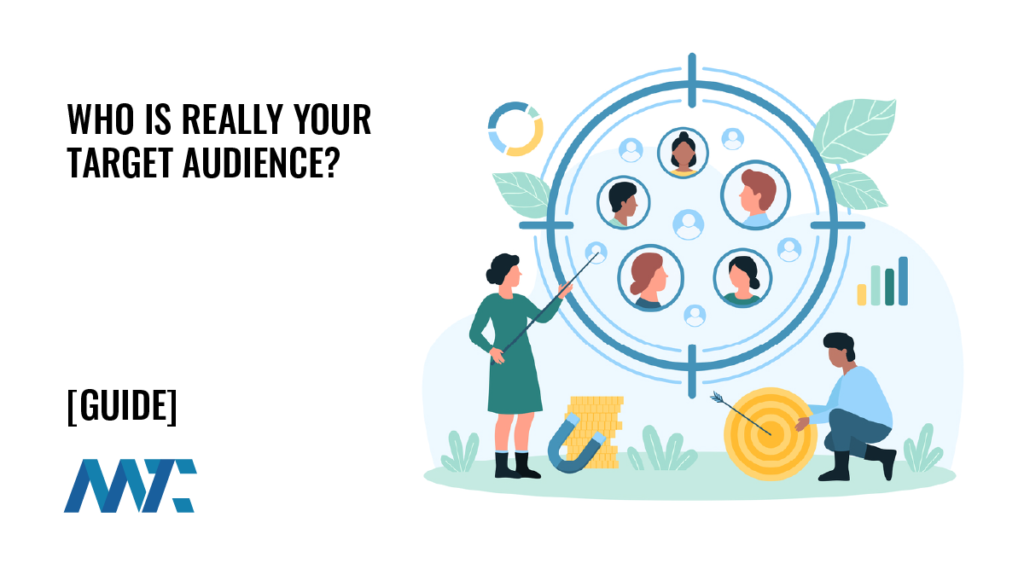
Marketers love to segment. It’s practically in our DNA. We build personas with demographic attributes, map behavioral paths through funnels, and model intent signals into look-alike audiences. These frameworks are helpful—but they often miss the most crucial question in marketing:
What job is the customer hiring this product or service to do?
That single question reframes everything. Instead of defining customers by who they are, it asks why they make the choices they do. It exposes the underlying progress people are trying to make in their lives, the constraints they’re navigating, and the outcomes they consider success. And in many cases, it uncovers motivations that no persona worksheet or funnel diagram would ever reveal.
Why Traditional Segmentation Isn’t Enough
Most segmentation methods assume that a customer’s attributes predict their needs. Age, income, family size, gender, job title—these factors can be helpful, but they rarely explain why people choose one solution over another. Two customers who look identical on paper may behave completely differently because they are trying to solve different problems. And conversely, people who appear unrelated demographically may cluster tightly around a shared underlying goal.
Markets don’t organize themselves around categories. They organize around progress. Customers hire products because those products help them move from their current situation to a preferred one. If a product reliably delivers that progress, it gets hired again and again. If it doesn’t, something else gets hired instead.
The Real Competitor Isn’t Always What You Think
When you understand the job a customer is trying to get done, your competitive landscape often changes shape. You may discover that you’re not competing against the company you’ve been benchmarking against for years—you’re competing against a workaround, a hack, or a behavior your customer has stitched together to survive the problem your product is theoretically built to solve.
This is why better features and more options don’t always translate into growth. If your enhancements improve the category but don’t improve the customer’s ability to achieve their goal, you’re not increasing relevance. You’re just adding friction.
Customers Don’t Buy Products—They Buy Progress
Understanding the job to be done requires digging beneath preferences and surface-level feedback. Customers may tell you they want faster performance, more straightforward navigation, or richer content. But beneath those requests is almost always a deeper struggle: save time, reduce stress, eliminate uncertainty, reach a milestone, avoid embarrassment, feel prepared, feel confident, or feel in control.
When you uncover the struggle, you find the real opportunity. People don’t search for project management software—they search for a way to avoid missing deadlines and letting colleagues down. They don’t buy fitness apps—they buy the promise of accountability when their motivation dips. They don’t choose premium support plans—they choose peace of mind when something breaks at the worst possible moment.
When you understand this, product strategy becomes far more grounded. So does messaging. So does innovation.
Innovation Emerges When You Solve the Job Better Than Anything Else
Once you identify the job, you can build solutions that fulfill it more completely. Sometimes this means improving the product in an unexpected way. Other times, it reveals that the most significant barrier isn’t the product at all—it’s the onboarding process, the delivery method, the pricing model, or the emotional friction that keeps people from taking the next step.
Teams that embrace the Jobs-to-Be-Done approach often uncover opportunities hiding in plain sight:
- Unmet needs that customers never articulate
- Adjacent jobs customers are already trying to solve with poor substitutes
- Frustrations that signal the desire for simplification, not complexity
- Constraints that customers assume are fixed, but are actually solvable
- Moments in the experience where the job breaks down and loyalty erodes
These insights become the fuel for focused innovation rather than incremental upgrades.
How Marketers Can Apply Jobs-to-Be-Done Thinking
The path to clarity starts with inquiry. Instead of asking customers what they want to buy, ask what they’re actually trying to accomplish. Look for the moments that trigger the purchase, the forces that push them toward or away from solutions, and the emotional landscape that shapes their decisions.
Then evaluate your product or service through that lens:
- Does your offering consistently help the customer achieve the progress they’re seeking?
- Does it make that progress faster, safer, easier, or more reliable?
- Does it address the anxieties or obstacles that keep customers from choosing you today?
- Do your competitors—direct or indirect—solve the job better?
- Does your marketing explain the job clearly or rely on category jargon that hides the real value?
The answers to these questions often illuminate where differentiation truly lives. It’s rarely in a feature list. It’s in the unique way your product enables someone to accomplish something meaningful.
The Job Is the Foundation of Every Growth Strategy
When you shift from What type of customer is this? to What job are they trying to get done?, you stop designing for abstractions and start designing for lived reality. Messaging becomes clearer. Product decisions become sharper. Innovation becomes more meaningful. And growth becomes far more predictable because you’re no longer guessing at motivations—you’re building for them.
Understanding the job is not a marketing exercise; it’s an organizational mindset. It’s the blueprint for building something people choose not because it’s new or different, but because it reliably helps them make the progress they’re already trying to make.
That’s the moment your product stops competing for attention and starts earning its place in the customer’s life.