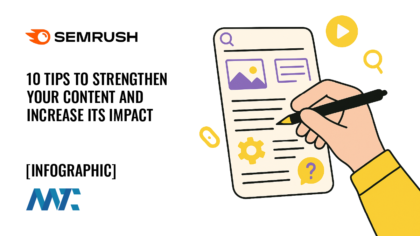
10 Tips to Strengthen Your Content and Increase Its Impact
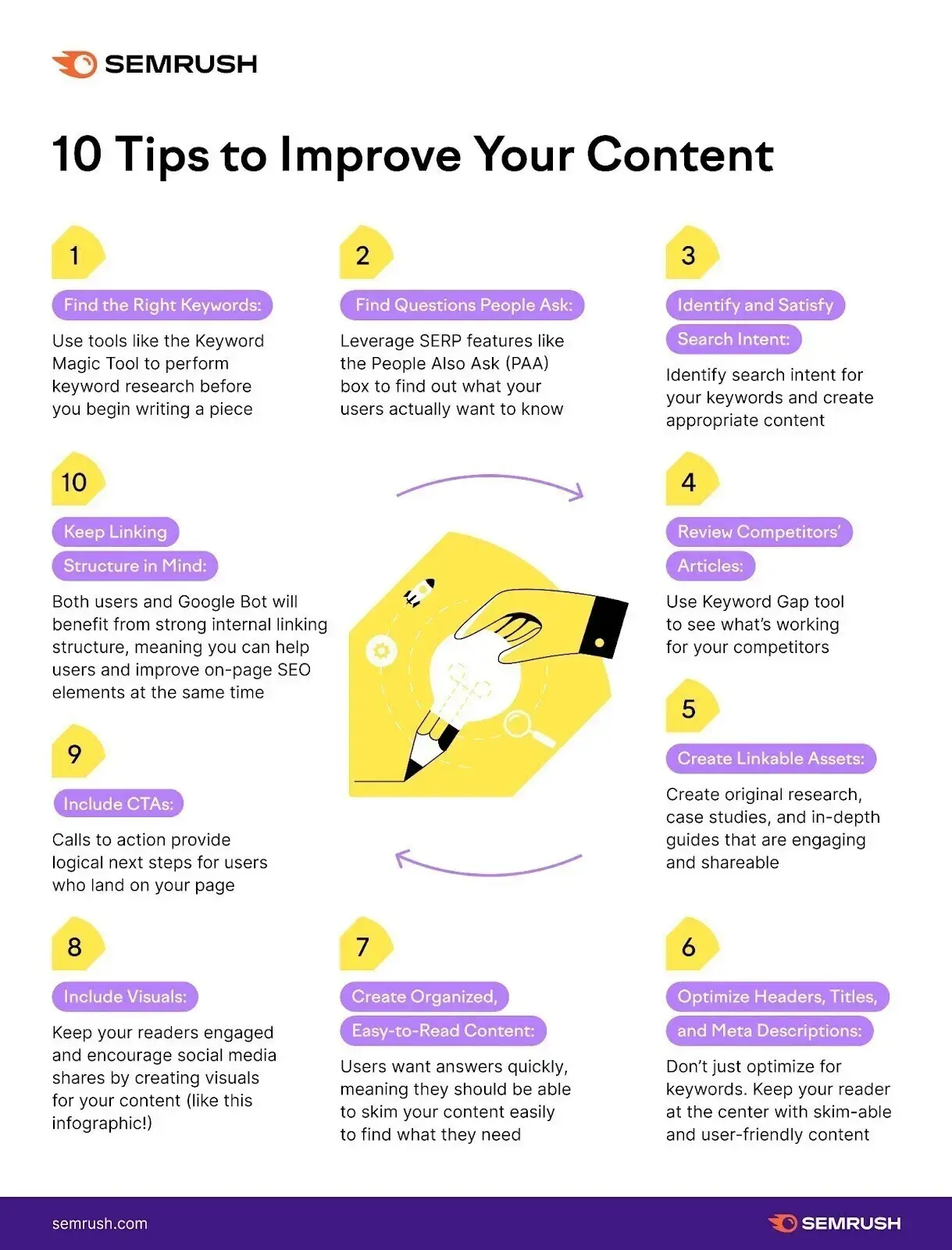
High-performing content is built on strategy, not guesswork. Whether you’re writing for visibility, authority, or customer conversion, the strongest results come from content that aligns with real user needs and delivers a clear, engaging experience. The following ten practices from Semrush provide a practical framework for improving your content’s reach, readability, and long-term value.
Table of Contents
Find the Right Keywords
Every strong piece of content begins with understanding the language your audience uses. Keyword research ensures your content aligns with real demand and prevents you from writing in a vacuum. When your topics reflect how people actively search, you naturally attract more qualified visitors who already have an interest in what you offer.
Best practices: Start with a primary keyword that clearly reflects the page’s intent, build a cluster of related secondary terms, and use natural phrasing rather than keyword stuffing. The more your content matches everyday search patterns, the more relevant it becomes to both readers and search engines.
Find Questions People Ask
People often search through questions, and tools like Google’s People Also Ask (PAA) block reveal exactly what those questions are. This gives you a direct view into your audience’s curiosity, concerns, and motivations. Writing content that answers these questions improves user satisfaction and increases your chances of earning featured snippets, thereby dramatically enhancing visibility.
Best practices: Integrate Q&A sections into your content, write short, clear answers that search engines can easily interpret, and add supporting FAQs to key pages (with schema tagging!). Build your answers around clarity and authority—Google rewards pages that quickly satisfy common queries.
Identify and Satisfy Search Intent
Behind every keyword is a purpose: learning, comparing, buying, or navigating to a specific resource. When your content fulfills the exact expectation of the searcher, they stay longer, read more, and convert at higher rates. Misaligned intent, on the other hand, increases bounce rates and weakens the page’s performance.
Best practices: Analyze whether the intent is informational, transactional, or comparative, and structure your content accordingly. Use formats that mirror what searchers expect—guides for education, lists for comparisons, and product pages for buyers. Look at top-ranking competitors to understand how intent is being met and where your content can improve.
Review Competitors’ Articles
Competitors who rank well demonstrate what search engines already view as high-value content. Studying these pages helps you understand market expectations, identify gaps, and determine where your content can compete more effectively. It’s not about copying—it’s about surpassing.
Best practices: Analyze competitor content for depth, organization, clarity, and missing angles. Look for areas where you can provide more data, stronger examples, or clearer explanations. Benchmarking helps you raise the standard of your content while shaping a distinctive perspective.
Create Linkable Assets
Some content is so useful, thorough, or unique that other sites naturally link to it. These linkable assets—industry research, case studies, frameworks, and original insights—build authority and strengthen your domain as a whole. Backlinks remain one of the strongest signals of trust online, and creating content worth citing is one of the most durable ways to earn them.
Best practices: Produce data-rich guides, original research, or visual resources that others will rely on. Add charts, infographics, and downloadable assets to increase shareability. Promote your content through outreach, newsletters, and social campaigns so people discover it sooner.
Optimize Headers, Titles, and Meta Descriptions
Titles and metadata shape the first impression your content makes in search results, while headers guide users once they arrive. Well-optimized structure improves readability, helps search engines understand the page, and encourages more users to click. Strong metadata alone can drastically improve performance even when rankings stay the same.
Best practices: Write titles that clearly communicate value, keep meta descriptions focused on the reader instead of just the keyword, and use headers to create a logical flow that helps people skim. Prioritize clarity and user experience—they matter as much as technical optimization.
Create Organized, Easy-to-Read Content
Readers skim before they commit, so your content needs to be visually inviting and easy to navigate. A clear structure increases engagement, reduces bounce rates, and helps visitors find what they came for without friction. This is especially important for business owners and marketers who want to demonstrate value quickly.
Best practices: Break long paragraphs into shorter ones, use lists where appropriate, guide the reader with clear sections, and ensure each idea builds on the last. Keep introductory sections tight, and maintain a logical progression throughout the piece. The easier your content is to process, the longer users stay.
Include Visuals
Visuals help readers grasp concepts faster and make your content more engaging and shareable. A well-placed graphic, screenshot, or diagram can reinforce your message, simplify complex ideas, and attract additional traffic through social sharing and image search.
Best practices: Use visuals that clarify or expand on the narrative, not just decorate it. Ensure images are compressed for performance, include descriptive alt tags for accessibility, and choose formats that load quickly on mobile devices. When possible, create original graphics to stand out in search and increase linkability.
Include CTAs
Even the best content should guide the reader toward a next step. A strong call to action turns passive readers into active prospects, subscribers, or customers. Without a clear CTA, valuable traffic slips away without producing a measurable business impact.
Best practices: Match the CTA to the reader’s stage in the journey—download a guide, schedule a demo, sign up for a newsletter, or explore related articles. Make CTAs visually distinct but not intrusive, and ensure the action feels like a natural continuation of what the reader just learned.
Keep Linking Structure in Mind
Internal linking strengthens your content ecosystem by helping both users and search engines navigate your site. It spreads authority, supports ranking for key pages, and increases session duration by offering readers deeper pathways into your expertise. A strong linking structure improves both SEO and user satisfaction.
Best practices: Link to relevant pages naturally within the text, ensure each link provides meaningful context, and create topic clusters around core themes. Avoid overlinking; prioritize quality and relevance. Regularly audit links to ensure everything is up to date and functioning.