Social Media Still Influences Revenue—But Not the Way It Used To
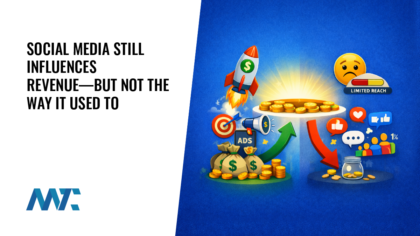
In the early days of social media, the relationship between activity and revenue felt almost magical. Post something compelling, encourage people to share it, and watch traffic and sales follow. Platforms rewarded sharing, feeds were chronological, and organic reach was abundant. A single action—liking, commenting, or sharing—could cascade through networks and produce measurable, direct financial returns.
That model no longer exists.
It reminds me of what happened in the newspaper industry where newspapers forgot their value to subscribers (the news) and began to see them, instead, as numbers to attract advertising. That industry worked for a couple of hundred years before its decline. It seems that social media is on a much faster route to self-destruction.
Social networks have matured into highly commercialized ecosystems designed to maximize time-on-platform and advertising revenue. While businesses continue to invest heavily in building communities and growing follower counts, the way social media contributes to revenue today is far more indirect, fragmented, and dependent on paid amplification than it was even a decade ago.
Table of Contents
From Direct Attribution to Assisted Influence
The most important shift is attribution. Social media used to function as a relatively clean top-of-funnel driver: a post generated clicks, clicks generated conversions, and analytics made the connection obvious. Today, social platforms primarily influence revenue through assisted conversions rather than last-click transactions.
Modern buyer journeys are longer, multi-device, and multi-channel. Social content often plays a role earlier in the decision process—creating awareness, reinforcing credibility, or keeping a brand top of mind—while the eventual conversion happens later through search, email, direct traffic, or retargeting ads. The revenue impact is still real, but it is harder to isolate and easier to misinterpret if you’re only looking for immediate sales from organic posts.
Organic Reach Is No Longer a Revenue Lever
One of the biggest reasons social media’s revenue impact feels diminished is the collapse of organic reach for business content. Platforms now intentionally restrict how many followers see unpaid posts, forcing brands to compete in the advertising auction to reach even their own audiences.
Social media can no longer be treated as a free distribution engine. Publishing content without a paid strategy rarely produces meaningful visibility, let alone consistent revenue. The expectation that a growing follower count will naturally translate into growing traffic and sales is outdated. Having had a few thriving communities that took years to build, these changes were quite the disappointment.
As a result, the economics of social media have flipped. Instead of social activity generating revenue on its own, revenue now depends on how effectively social platforms are integrated into a broader paid, owned, and earned media strategy. I’ve since shut down my pages.
Social Media as a Revenue Accelerator, Not a Revenue Source
Where social media still excels is acceleration. It can shorten sales cycles, increase conversion rates, and amplify the effectiveness of other channels—but only when used deliberately.
For example, social proof in the form of comments, reviews, user-generated content (UGC), and community engagement can materially influence purchase decisions once a prospect lands on your site. Retargeting ads to people who engaged with social content often convert better than cold traffic. Event promotion, product launches, and time-sensitive offers can gain momentum quickly when supported by paid social distribution.
In each case, social media isn’t driving revenue by itself. It’s increasing the efficiency of channels that do.
The Strategic Shift Toward Owned Audiences
The most successful revenue-driven social strategies today focus less on keeping people on the platform and more on moving them off the platform. Email lists, SMS subscribers, app users, and customer accounts represent durable assets that aren’t subject to algorithm changes or competitive bidding wars.
Social platforms are increasingly best viewed as intake channels—places to discover, engage, and qualify audiences before transferring the relationship into systems you control. When social activity results in first-party (1P) data capture, its revenue impact becomes more predictable and defensible over time.
Without that step, brands risk investing heavily in audience growth only to find that competitors can reach the same people more frequently and more persuasively with ads.
What Driving Revenue From Social Media Means Now
Driving revenue through social media today means accepting a more complex reality. It means recognizing that likes, shares, and followers are not revenue metrics. It means budgeting for paid amplification as a requirement, not an optional enhancement. And it means measuring success across the full customer journey rather than expecting immediate transactional returns from organic posts.
Social media still matters—but its role has evolved from a direct sales driver into a strategic layer that supports awareness, trust, and conversion across other channels. Businesses that adjust their expectations and architectures accordingly can still realize strong returns. Those that cling to the old model of free reach and viral sharing will continue to wonder why the numbers no longer add up.
Takeaways
- Organic community building still works in narrow use cases: Businesses built around real-world participation and shared identity—such as events, festivals, venues, bands, artists, local organizations, and membership-driven groups—can still succeed with organic community building because the value exchange is intrinsic. People join to belong, to participate, and to stay informed about experiences they already care about, which sustains engagement even with limited feed visibility.
- Most businesses should not expect organic reach to drive revenue: For brands selling products or services without a strong experiential or community-centric hook, organic Facebook visibility is no longer a reliable growth lever. Algorithmic suppression means consistent posting does not equal consistent exposure, making organic social an unreliable standalone revenue channel.
- Growing a Facebook community without a capture strategy is risky: Building a large following inside Facebook without moving those relationships into owned channels creates a structural vulnerability. Competitors can target the same audience with ads, effectively turning your community into a shared acquisition pool rather than a protected asset.
- Facebook is better used as an intake layer than a destination: The most resilient strategies use Facebook to spark interest, validate credibility, and encourage lightweight engagement, then deliberately route high-value users into systems you control through email, SMS, accounts, or registrations.
- Paid social is no longer optional for visibility: If revenue is the goal, paying for distribution is table stakes. Even your existing followers are increasingly reachable only through paid placement, making amplification a requirement rather than an enhancement.
- Competitor communities represent real acquisition opportunities: The same platform dynamics that allow competitors to poach your audience also work in reverse. Brands with clear differentiation and a strong value exchange can ethically target audiences already educated by competitors and convert them more efficiently into owned channels.
- Revenue follows ownership, not engagement metrics: Likes, comments, and follower counts are signals of activity, not outcomes. Sustainable revenue growth comes from controlling access to your audience and continuing the relationship outside algorithm-governed feeds, with social media serving as a bridge rather than the endpoint.