The Expansive Benefits of Organic SEO: How Search Intent Powers Every Marketing Channel

Organic search has always been the one digital channel where the user—not the brand—controls the conversation. People open a search engine because they have intent. They are actively trying to solve a problem, evaluate a product, understand a concept, compare options, or complete a task. No other channel places the audience in such a self-guided, mission-oriented mindset.
Social media may capture attention, email may nudge, advertising may persuade, and PR may influence perception—but search is the only moment when users volunteer their needs, describe them in their own words, and ask for help.
This is why SEO continues to produce disproportionate ROI compared to other acquisition investments. When you optimize for search, you are optimizing for the deepest and most measurable form of demand. You are aligning your content, experience, and product with the questions and motivations of people who are already interested. And in the process, you create all the raw material you need for every other channel—press releases, ads, email sequences, whitepapers, video scripts, FAQ repositories, Q&A responses, knowledge base (KB) content, ebooks, gated guides, and more.
Table of Contents
SEO forces clarity. It forces completeness. It forces relevance. Everything else merely repurposes that work.
Search Intent as the Central Organizing Principle of Content
Unlike interruption-based marketing, search begins with a user-defined question. This creates a unique dynamic:
- The user’s intent is explicit, not implied.
- The content is judged instantly by its ability to solve that intent.
- The brand earns trust only by delivering value.
A well-executed SEO strategy maps every stage of intent—from awareness to consideration to decision—and builds a structured content library that directly addresses each nuance. That same structured library becomes the substrate for other channels. Press teams rework these pieces into stories. Ad teams turn them into landing pages. Sales teams use them as follow-up materials. Customer success teams convert them into help articles. Email teams turn them into nurture flows. Product teams use them to refine messaging and improve documentation.
Organic SEO isn’t just one channel in the mix. It is the foundational research and message infrastructure for all channels.
The Expanding Search Landscape
Search behavior has evolved, and organic optimization now touches three primary modes of discovery:
- SEO: Traditional search engine optimization for ranking in web results.
- AIO: Answer engine optimization for AI-driven results and conversational retrieval.
- GEO: Generative engine optimization for models that synthesize insights from multiple documents and expect well-structured, authoritative content.
In this emerging landscape, high-quality SEO content is not merely helpful—it is a prerequisite. All modern AI-driven retrieval systems reward clarity, comprehensiveness, structure, accuracy, semantic richness, and context. If you build content to win search, you simultaneously build content that machines can parse, summarize, and reuse across AIO and GEO environments. The very practices that make content rankable—clean structure, strong headings, schema, internal linking, authoritative detail—make it machine-intelligent.
The brands that thrive in this new environment are not those chasing algorithm loopholes. They are those building deep, user-oriented, answer-driven content libraries.
SEO Strengthens All Other Marketing Disciplines
Organic search forces you to create the most strategic, durable content in your organization. Once produced, this content becomes the fuel for every other channel.
- PR teams extract angles, quotes, stats, and expert viewpoints.
- Advertising teams reuse landing page content, CTAs, product messaging, and value propositions.
- Knowledge base teams pull from SEO content to create clear, indexed help materials.
- Sales teams rely on SEO content to educate prospects and respond to objections.
- Email teams use SEO content for nurture flows, onboarding, and product education.
- Social teams break SEO content into micro-stories, graphics, carousels, and video scripts.
- Long-form content—whitepapers, ebooks, webinars, workshop materials—comes directly from the research and writing developed for organic visibility.
In many organizations, SEO content becomes the single source of truth around messaging, differentiation, audience needs, and brand positioning.
Local SEO and E-commerce SEO
Local SEO focuses on geographic relevance—Google Business Profiles (GBP), citations, service area clarity, localized content, reviews, and proximity signals. Even here, organic content plays a critical role. Searchers want proof that you understand their location, market nuances, urgent needs, and context. Local landing pages, city-specific guides, FAQs, and structured data round out your authority.
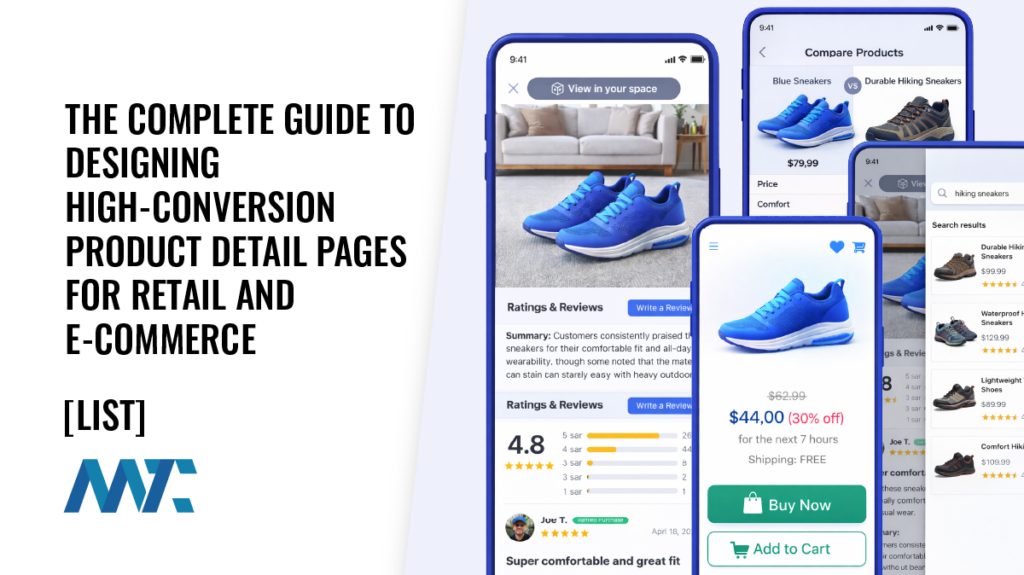
E-commerce SEO relies heavily on structured product data, detailed descriptions, high-quality media, category architecture, faceted search considerations, and user-generated content. Organic wins come from highly optimized product pages, robust category content, and deep educational materials that reduce returns and increase conversions. The competition for transactional queries is fierce, and organic search remains one of the few ways to acquire customers at scale without runaway advertising costs profitably.
Both local and ecommerce channels are strengthened not just by keywords but by the entire content ecosystem built through SEO.
User Experience as a Ranking Force
Search engines have made user experience metrics inseparable from ranking performance. Core Web Vitals—Largest Contentful Paint, Cumulative Layout Shift, Interaction to Next Paint—represent real user frustrations. They measure whether your site loads quickly, remains stable, and becomes interactive without delay.
Improving these metrics yields two benefits simultaneously:
- Users stay longer, engage more, and convert at higher rates.
- Search engines reward the improved experience with stronger visibility.
Technical SEO extends beyond CWV: proper indexing, structured data, clean URLs, canonicalization, compression, caching, accessibility, image optimization, and information architecture are all now central ranking factors. Fixing these is not just about rankings—it is about user satisfaction. When you serve users better, search engines reflect that improvement.
Quantifying ROI From Organic SEO: A Practical Walk-through
The long-term ROI of SEO is often misunderstood because it compounds slowly and is not tied to ad spend. But it can be quantified clearly. The process typically follows these steps:
- Determine the lifetime value (LTV) of your ideal customer. Organic search disproportionately attracts high-intent visitors, so LTV tends to be strong.
- Determine your current baseline traffic and conversion rates. This includes micro-conversions (e.g., email signups) and macro-conversions (e.g., purchases, demos, calls).
- Identify your total addressable search volume. Keyword research reveals the aggregated monthly demand for topics in your vertical.
- Build a content map that targets every key stage of the customer journey. Awareness keywords may be informational, while commercial intent queries indicate readiness.
- Estimate the achievable traffic share based on ranking potential. Top positions earn predictable click volume. You can model how many conversions would occur if you moved from page two to page one—and then from position six to position two.
- Quantify the avoided advertising cost. If a click costs $3–$25 in paid search, but organic rankings bring tens of thousands of those clicks per month, you can calculate the equivalent ad spend savings.
- Measure downstream repurposing value. Every SEO article prevents duplicate labor across PR, email, sales enablement, and customer support.
When these factors are combined—CAC, LTV, avoided ad spend, content reuse savings, improved user experience, and increased conversion rates—the ROI of SEO becomes measurable, predictable, and typically exponential.
Additional Organic Strategies That Deepen Visibility and Authority
Organic SEO extends far beyond creating articles. It includes:
- Semantic clustering and topical authority development.
- Structured data that enhances AI understanding and SERP visibility.
- Internal linking to strengthen crawl paths and content relationships.
- Editorial calendars driven by search demand, not guesswork.
- Expert-driven, differentiated content that demonstrates actual authority.
- High-quality backlink acquisition through earned media and thought leadership.
- Technical improvements that reduce friction and increase performance.
- Comprehensive FAQs, glossaries, resource hubs, and evergreen guides.
- Repurposing long-form content into videos, carousels, infographics, and podcasts.
- Leveraging user-generated content and reviews to build trust signals.
The strongest organic programs unify all of these under a single, cohesive system.
Why SEO Remains the Most Valuable Long-Term Growth Channel
Organic search sits at the intersection of user intent, content excellence, technical discipline, and multi-channel leverage. When a company invests deeply in SEO, it is simultaneously investing in:
- Better messaging
- Better UX
- Better technical performance
- Better educational resources
- Better sales enablement
- Better PR and thought leadership
- Better customer retention
- Better overall brand authority
Other channels rent attention. SEO builds equity.
Search engines change, SERP layouts evolve, AI reshapes discovery, and formats shift—but the user’s intent does not change. People will always turn to search engines to solve problems. When you meet those needs better than anyone else in your market, the returns reverberate across every department, every campaign, and every future piece of content you create.
Organic SEO is not just a tactic. It is the backbone of a modern marketing ecosystem.